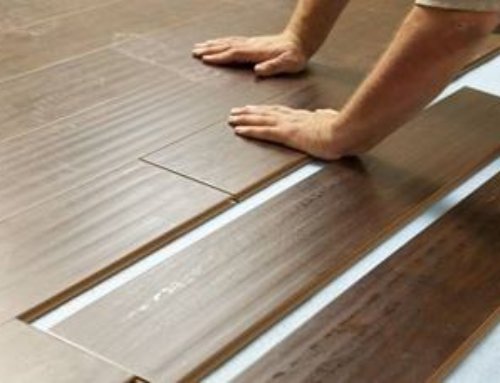
Wood plastic composite is a new class of composite materials in recent years. It is made of a unique blend of natural wood and plastic fibers. Sawdust, pulp, bamboo, peanut hulls, and unused woodworking materials, like bark, from a variety of projects, are combined with polyethylene, polypropylene, and polyvinyl chloride, etc. to form this new material WPC. Then by extrusion, molding, injection molding and other plastics processing, wood plastic composite is produced out in a variety of colors, shapes and sizes, and with different surface textures.
Depending on the processing method, WPCs can be formed into almost any shape and thus are used for a wide variety of applications, including windows, door frames, interior panels in cars, railings, fences, landscaping timbers, cladding and siding, park benches, molding and furniture.

Material:
Wood Particle, Plastics and Additives
WPC Manufacturing Processes
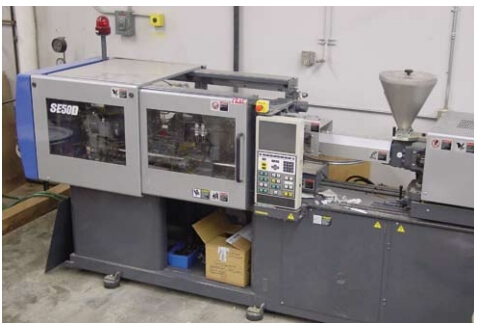
The manufacturing processes for wood-plastic composites are extrusion, injection molding, and compression molding or thermoforming (pressing).
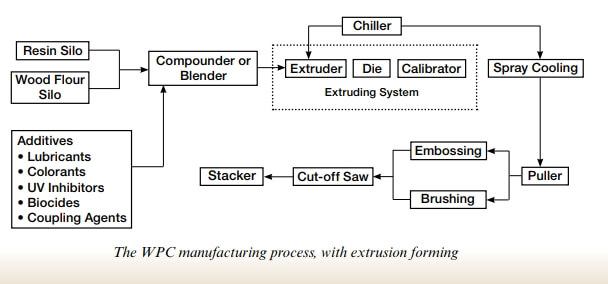
Step 1 Prepare and Mix compounding
Raw material composed of wood and natural fiber polymer and critically formulated additives is assembled and entered into specific loader to mix.
Step 2 Extrude the Mixture
Step 3 Cool What’s Produced
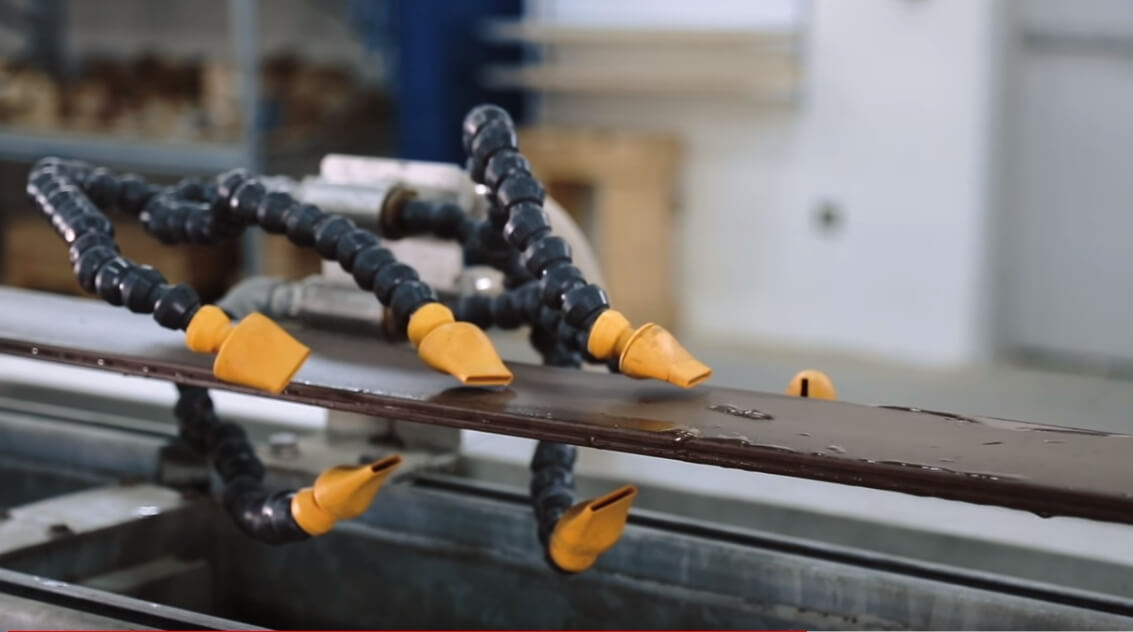
Step 4 Imprint, Treat, Cut, Stack
After that, the product is re-inspected, cut to the desired length, size and stacked and packed.